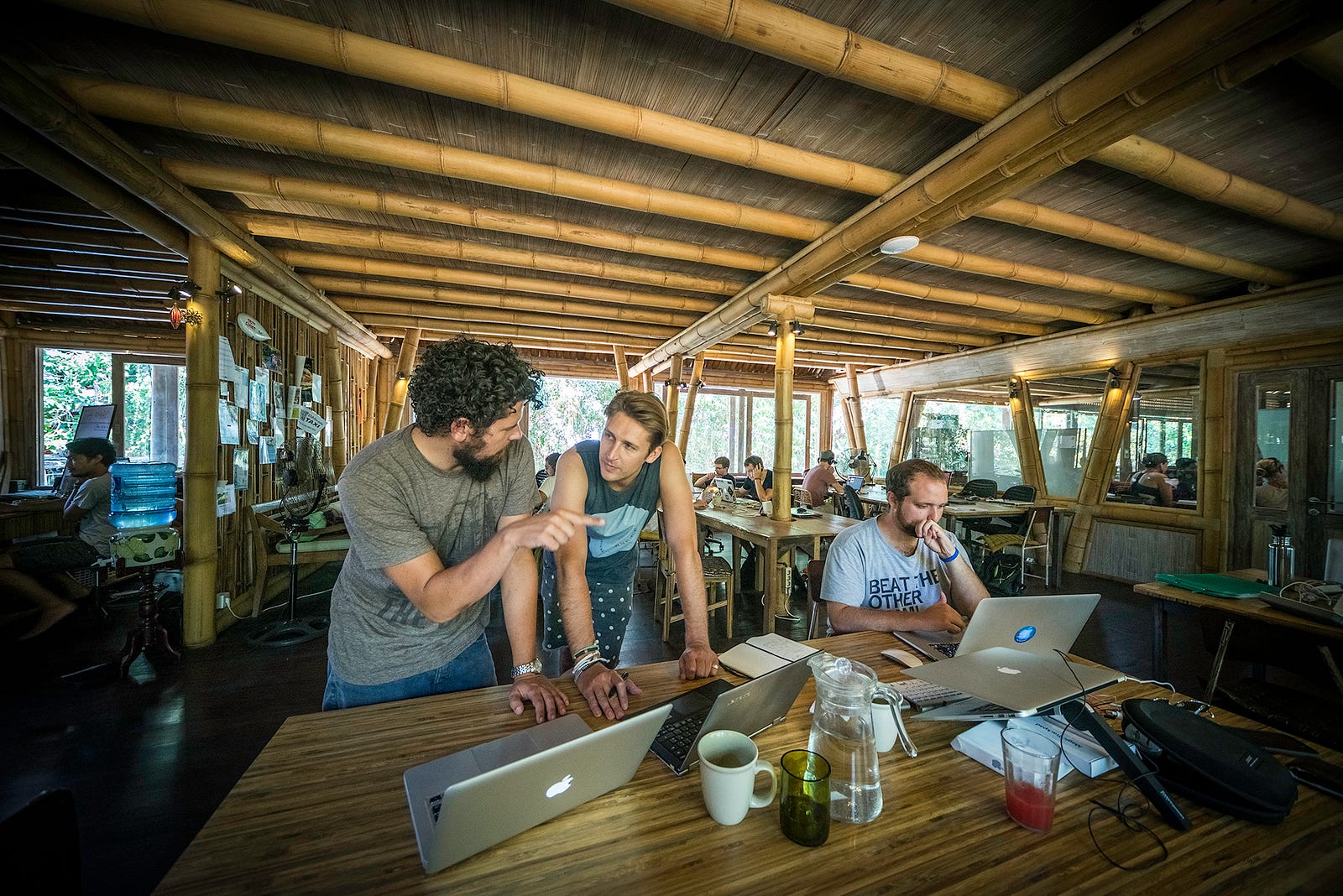
This isn’t a listicle. It’s the scaffolding behind the nomad life, built from real disasters and the tools that saved me.
It is easy to romanticize remote work. The café in Bangkok with filtered light and steady Wi-Fi. The co-working space in Tbilisi where half the room is building something and the other half is pretending to. The mountain guesthouse in Georgia where you answer emails before the clouds roll in and call it balance.
What rarely enters that picture is the layer underneath it. Digital nomadism is not sustained by wanderlust or aesthetic workspaces. It is sustained by systems that prevent small technical failures from turning into structural ones. The longer you stay on the road, the more you realize that the difference between inconvenience and crisis is usually infrastructural.
Connectivity Before Anything Else
The most fragile moment in any relocation is the first hour after landing. No data means no map. No ride-hailing. No access to your password manager. No way to message your host. The entire digital stack depends on connectivity.
eSIM platforms such as Airalo or Holafly have quietly removed that vulnerability. Activating data before takeoff means you step into a new country already connected. It sounds procedural, but it stabilizes everything that follows. Infrastructure begins with signal.
Secure Access in Shared Spaces
Public Wi-Fi is not malicious. It is indifferent. Every café network is shared territory. Most users are harmless. Some are careless. A few are curious in ways you would rather avoid.
I treat a VPN as default posture rather than emergency response. Personally, I use NordVPN, largely because its Meshnet functionality allows me to route traffic through a trusted home device when banks become suspicious of foreign logins. Alternatives such as ExpressVPN or Surfshark serve the same structural purpose. The point is not brand loyalty; it is encrypted consistency.
Financial platforms are built around geographic expectation. Log in from Cambodia on Monday, Romania on Wednesday, and Colombia on Friday, and you eventually trigger alarms. Routing traffic through a stable region reduces friction. When your income depends on uninterrupted access, predictability becomes more valuable than speed.
The Two-Factor Trap
Password security advice tends to assume a stationary life. Nomads learn quickly that SMS-based two-factor authentication is the real weak point. Many banks insist on texting a code to a home-country SIM card that may be sitting unused in a drawer thousands of miles away. When that number becomes unreachable, access collapses.
Password managers such as 1Password solve the credential side of the equation, but authentication requires equal attention. Apps like Authy synchronize authentication tokens across devices. For accounts that insist on SMS, using a VoIP number such as Google Voice can prevent geographic dependency. For higher-security environments, hardware keys like YubiKey eliminate reliance on telecom networks entirely.
The goal is not technological sophistication. It is ensuring that losing a phone or crossing a border does not sever your professional identity.
Files That Survive Hardware Failure
When your professional life lives inside a backpack, it is tempting to believe portability equals resilience. In practice, concentrating everything onto a single machine increases risk.
I rely on Dropbox for active synchronization because it keeps current work mirrored across devices. Google Drive or iCloud perform similar roles. Synchronization ensures that losing hardware does not mean losing current files.
But syncing is not backup. Syncing reflects the present; backup preserves history. Services such as Backblaze maintain encrypted system-level copies of everything, including the disorganized and forgotten. The practical question is simple: if your laptop disappeared this afternoon, how many hours would it take to return to full functionality? The lower that number, the lighter you travel.
Workflows That Ignore Geography
When your office shifts across time zones, productivity must detach from location. I keep projects structured inside Notion, where documentation, timelines, research, and administrative notes exist independently of where I open them. Airtable or Monday offer comparable systems; the tool matters less than the structural clarity.
Communication relies less on synchronous calls and more on persistent environments like Slack. When explanations require nuance, Loom replaces prolonged email threads with direct visual context. The aim is not speed but continuity. A project should remain stable whether I am in Lisbon, Tbilisi, or Phnom Penh.
Financial Stability in Motion
Traditional banks are calibrated for geographic predictability. Nomadic spending patterns trigger automated suspicion. Platforms like Wise or Revolut are built with cross-border behavior in mind. Multi-currency balances, transparent exchange rates, and lower transfer friction reduce cumulative strain.
Expense tracking tools such as Trail Wallet or YNAB provide something less visible but equally important: perspective. When income and geography both fluctuate, clarity around spending patterns prevents subtle financial drift. Awareness is stabilizing. It keeps decisions strategic rather than reactive.
The Quiet Foundation
None of these systems are glamorous. They do not appear in photographs, and they rarely make it into stories about sunsets or street markets. Yet they form the structure that allows long-term mobility to remain sustainable rather than exhausting.
As I write this from my quiet home in Tuol Tom Poung in Phnom Penh, the infrastructure is operating quietly. My connection is encrypted. My authentication codes are device-independent. My files exist in multiple physical locations. My financial movements are predictable. If hardware fails or access shifts, recovery is procedural rather than existential.
Digital nomadism is often framed as spontaneity. In practice, it rests on careful architecture. Freedom on the road is rarely about abandoning structure. It is about constructing the kind that travels with you.
Ramon